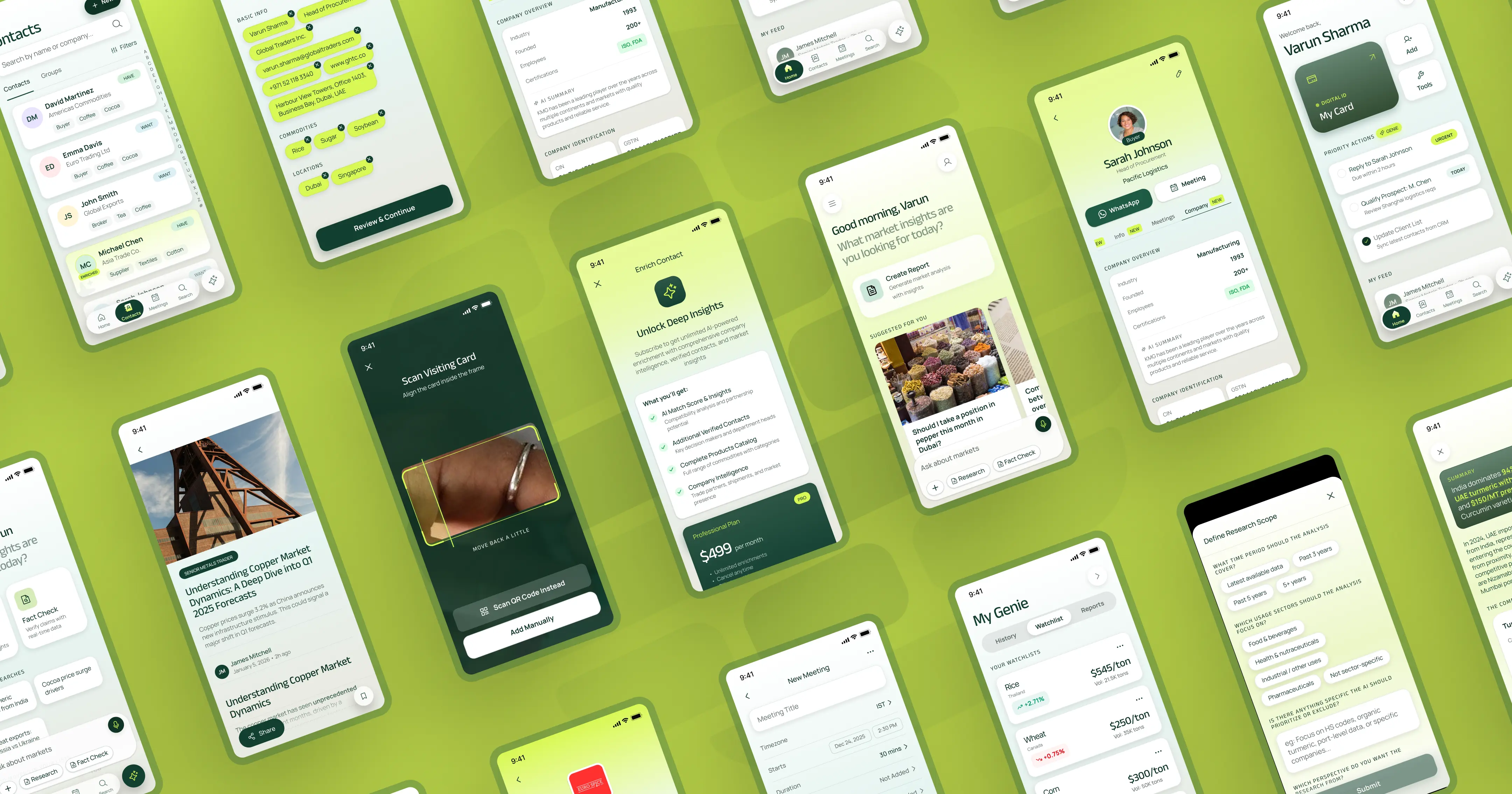
Role: UX, UI Design (App)
Scope: End-to-end app design (flows, UI, edge cases)
Timeline: 1.5 months
Tools: Figma
🎯 The Mismatch
Commodity trading isn’t just about numbers.
It’s about conversations, relationships & context over time.
But traders today juggle everything across Whatsapp, Calls, Spreadsheets & Notes.
Which leads to:
Lost context
Missed follow-ups
Slower decisions
Traders don’t forget people they forget why those people mattered.
The problem isn’t lack of data.
It’s the loss of context across conversations.
🧠 The Approach
Instead of designing another “trading dashboard,”
I focused on:
Making relationships easier to manage
Preserving trade context
Reducing cognitive load across workflows
Key focus areas:
Clear navigation
Simple visual hierarchy
Accessible interaction patterns
The goal was to make the product feel usable, not intimidating.
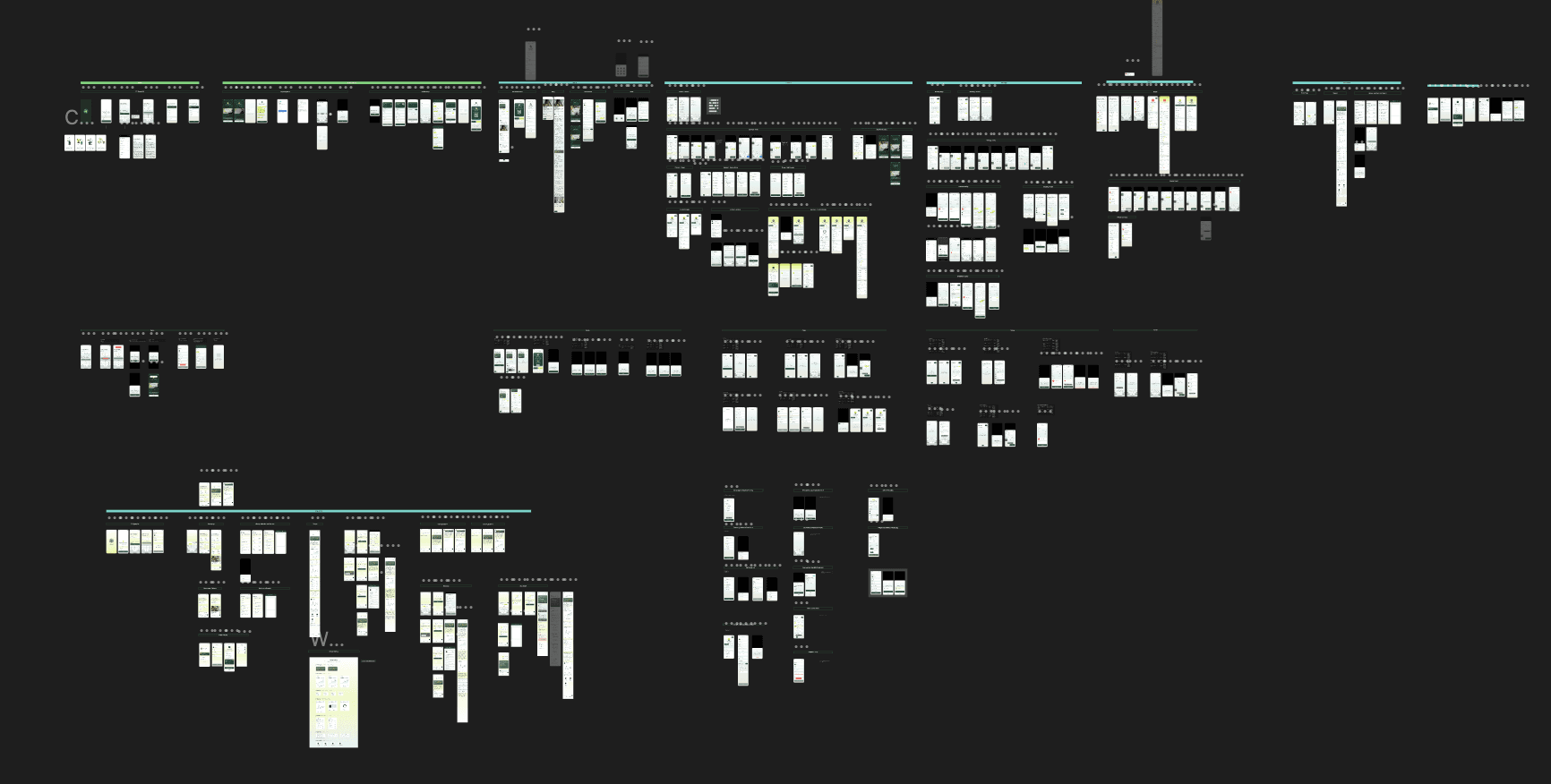
Figma Screenshot of all deliverable screens with proper flows
🎨 UI Direction
Trading apps often look Dense, Technical & Overload
I moved towards:
Cleaner layouts
Better spacing
Clear typography
Simplified color usage
Designed for readability and comfort over intensity.
🧩 Core Experience
🤝 Connecting with traders
Users can discover and connect with relevant buyers/sellers
Focus on high-intent conversations, not random networking
📅 Scheduling interactions
Book time with other traders
Structured way to discuss trades
Save notes and other imp info form the calls
📊 Tracking trades
Keep track of trades
Monitor progress and decisions
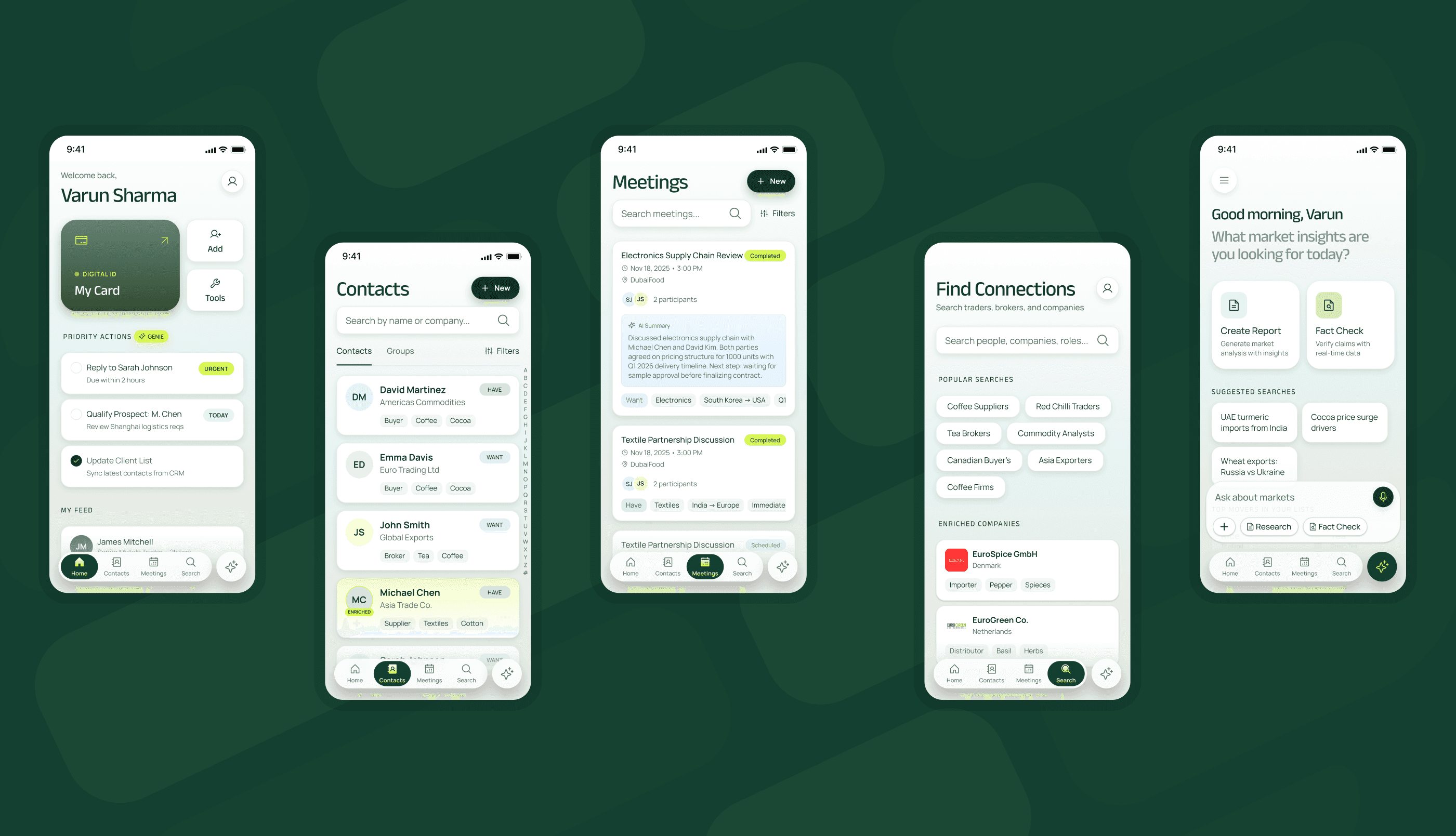
Core Screens from Left to right: Home, contact, meetings, search and Trade genie AI.
⚡ Key UX decisions
Simplified UI for better readability
Reduced visual noise common in trading apps
Designed for older users (clarity over density)
Focused on interaction, not just data
🚀 Impact
The design was focused on:
Making trading interactions more structured
Reducing overwhelm for users
Improving clarity in decision-making
Turning isolated trading into a more guided, connected experience.
🧩 Challenges
Balancing data with simplicity
Designing for less tech-savvy users
Avoiding clutter in a data-heavy domain
Handling multiple flows and edge casesy
🧠 Reflection
If I had more time, I’d extend this into:
Test usability with real traders
Improve onboarding for new users
Explore deeper analytics + insights
In trading, information is everywhere.
Context is the real edge.